 LANGUAGE :
.jpg)


.jpg)
.jpg)


|
04/08/2026 17:16:56 203x read.
INSPIRATION THE MOTHERLY CHARACTER IN THE LIVES OF THE FIC BROTHERS
THE MOTHERLY CHARACTER IN THE LIVES OF THE FIC BROTHERS Bro. Michael Sidharta Susila Mary plays a special role in the FIC Congregation. From the very beginning of the FIC Congregation, even in the life of its founder, Father Ludovicus Hubertus Rutten, there has been a special bond with Mary. Rutten was born on December 8, 1809. At that time, December 8 had not yet been designated by the Church as the feast day of the Immaculate Conception of Mary. Later, the Catholic Church officially established the dogma of the Immaculate Conception on December 8, 1854. This determination was made by Pope Pius IX through the apostolic document Ineffabilis Deus. In a special way, it seems the universe orchestrated the relationship between Ludovicus Hubertus (L.H.) Rutten and Mary. The same is true of the special relationship between the FIC Congregation, founded by Father L.H. Rutten, and Mary. With this awareness, this article seeks to explore how to emulate Mary in the spirit of Mgr. L.H. Rutten, the founder of the FIC Congregation.
Articles 12 and 75 of the FIC Constitutions present Mary as a humble servant of God, faithful in darkness and suffering, and full of compassion for the poor and needy. When we read the history of the FIC Congregation, especially the life story of Mgr. L.H. Rutten, we see that Mary's maternal character is truly lived out in the congregation’s history through the spirit and work of Mgr. L.H. Rutten. Motherhood that Gives Birth and Preserves Life Maternal character first appears as the ability to give birth. In the life story of Mgr. Rutten, we see how Rutten's vocation was shaped by the experience of losing his mother as a child and being raised by his grandmother, Maria Lousberchs. This experience undoubtedly caused Rutten psychological trauma. However, it also seemed to foster in Rutten a deep sensitivity to the plight of unprotected children. Rutten's life, with all its struggles, seems deeply connected to the maternal figure. Rutten himself acknowledged that his entire work and life grew "under the protection of the Immaculate Conception, whose help I have always hoped for and will always receive until the moment of my death." Like Mary, who said, “Behold, I am the handmaid of the Lord” (Luke 1:38), Rutten dedicated his life to a work that offered no security, status, or comfort. He began teaching catechism to just three poor children in a small room next to the sacristy of St. Servaas Church. From these humble beginnings, the Church’s maternal work was born, embracing hundreds of poor children, young workers, orphans, and those marginalised by the social system in Maastricht at the time. Rutten’s life and work were like a womb for these disadvantaged young people. Motherhood as Sensitivity to the Small and Weak Mary glorified God, who “lifts up the lowly and satisfies the hungry” (Luke 1:52–53). The Canticle of the Magnificat finds concrete echoes in Rutten's life choices. He did not choose the safe path as an assistant parish priest but consciously supported the education of poor children. His commitment and tenacity were tested when, because of his efforts to improve the dignity of poor people, he had to face the secret police, education inspectors, and pressure from civil authorities. In the story of the secret police's inspection of a kindergarten, Rutten displays firm yet humane motherhood. When an officer wants to continue surveillance, Rutten humbly and honestly states that the police presence makes him tremble—and from then on, the surveillance stops. Motherhood here is not a weakness but courage rooted in love and truth. For the FIC Brothers, the maternal character demonstrated by Rutten means being present in the world as a sensitive brother, defending those without a voice, and refusing to use laws or structures as an excuse to turn a blind eye to human suffering (cf. Const. FIC, art. 17, 57). Motherhood in Cultivating and Accompanying the Vocation The maternal aspect is also strongly evident in the way Rutten accompanied the first postulants and brothers. The story of Frans Donkers, the first postulant who died young after a difficult mental struggle and a serious illness, is one of Rutten's most profound testimonies. Rutten wrote personal letters expressing deep care for Frans Donkers, visited him when he was ill, arranged his funeral, and even slept in a bed still stained with his vomit. These experiences left a lasting impression on him. Here, Rutten's spiritual motherhood is clearly evident in a willingness to suffer together, to care with love, and to remain faithful even when the outcome is failure or death. If Mary, with all her struggles and sorrows, steadfastly stood under the cross (John 19:25), so too has Rutten demonstrated his loyalty and steadfastness by standing beside the calls of his brothers in the fragile congregation, with a mother's heart. Motherhood in Communion and Self-Sacrifice The FIC Constitution emphasises that community life should be characterised by patience, personal attention, and forgiveness. This spirit was embodied by Rutten from the beginning. He cared not only for his work but also for his brothers' welfare. This is evident in the story of the founding of the FIC Congregation, when Rutten helped build the brothers’ house with his own hands, lived like a common labourer, and sacrificed his personal wealth for the community's survival. In the spirit of Mary, who “kept all things in her heart” (Luke 2:19), Rutten endured failure, rejection, and shortcomings without blaming others. When a project failed, he explicitly stated that he would not sue anyone and would bear the consequences himself. Isn't this a responsible, spiritually mature, and motherly attitude? Open and Collaborative Motherhood True motherhood is not exclusive. Rutten demonstrated this through his extensive collaboration with various congregations of sisters, such as the Ursulines, Charity, Misericordia, and the Daughters of the Blessed Sacrament. All of this was done in service to poor girls, abandoned women, and mothers cast aside by society. He provided housing, covered living expenses, and accepted that the work evolved beyond his control. Rutten's attitude, commitment, and struggle align with the Second Vatican Council's teaching that Mary is the Mother of the Church, whose motherhood extends to all of God's people (Lumen Gentium, 63). The FIC Brothers' maternal character is likewise expected to be inclusive, dialogical, and open to the Spirit's work in various forms of ministry. After reflecting on Mary's maternal character in the context of the life of Mgr. L.H. Rutten and the history of the FIC Congregation, we find that in Mary and in the example of Mgr. L.H. Rutten, the FIC Brothers are called to be maternal in a spiritual sense, namely by giving birth to life through love, protecting the vulnerable, persevering in suffering, and remaining faithful in hope. By following in these footsteps, the lives of the FIC Brothers truly become an extension of Mary's maternal hand in the midst of the Church and the world, so that together with Mary we can say: "The Almighty has done great things" (Luke 1:49). |

GENERAL COUNCIL F.I.C. - Prins Bisschopsingel 22, 6211 JX Maastricht, The Netherlands Phone: *31 (0) 43 3508373
Saturday, September 19 2026 - 17 User Online
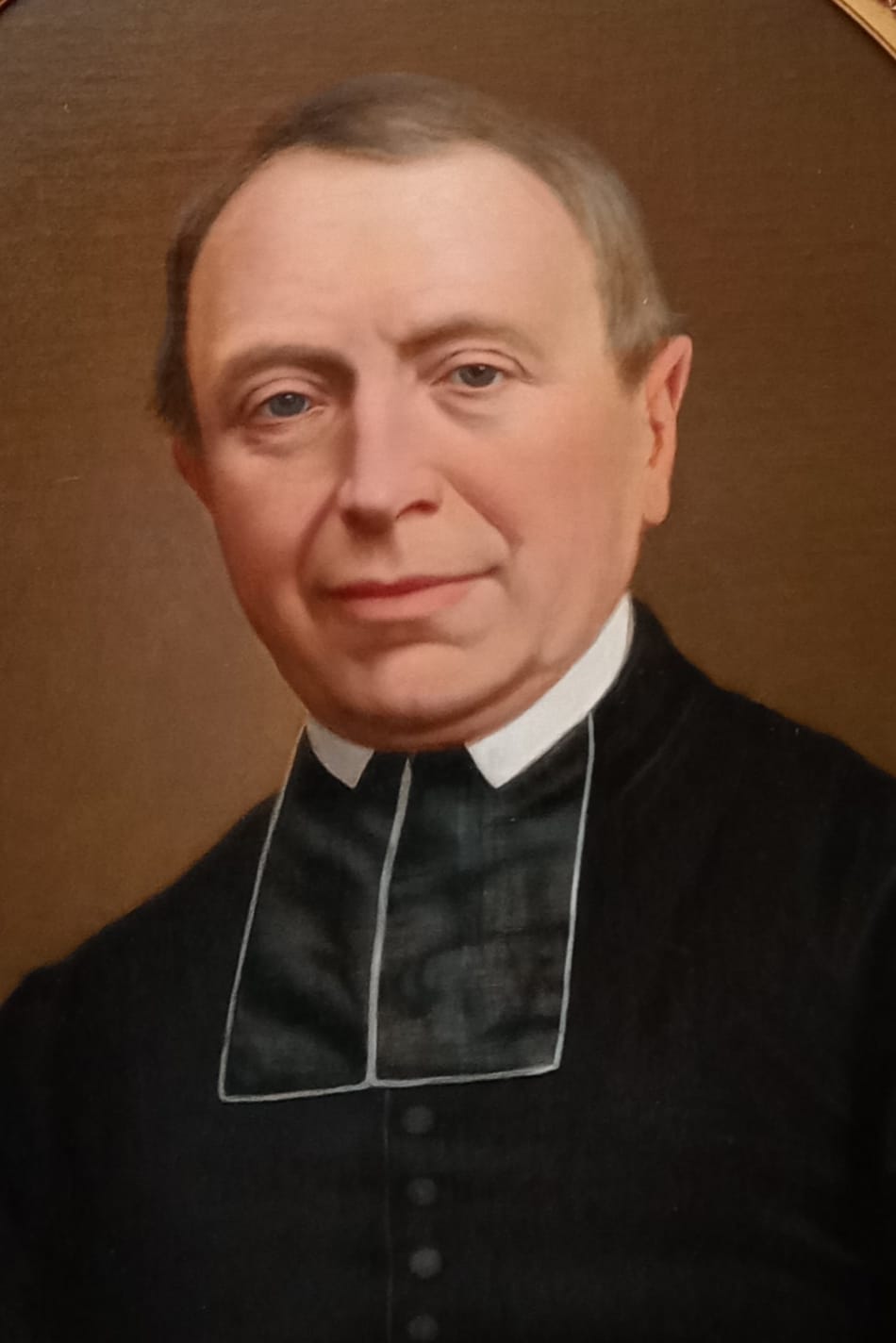 For the FIC Brothers, the Immaculate Conception, the Patroness of the Congregation, is more than a figure of devotion. Mary is a living source of inspiration that shapes the souls and mission of the FIC Brothers.